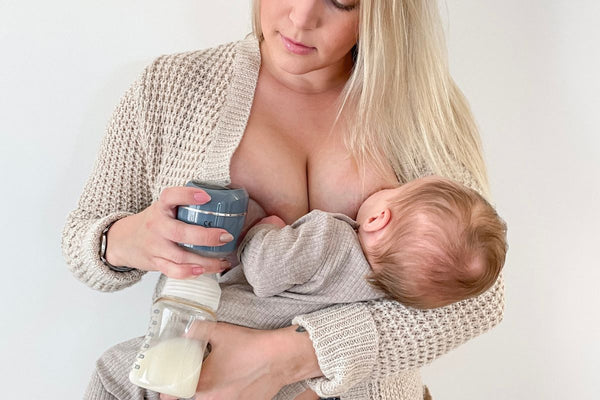
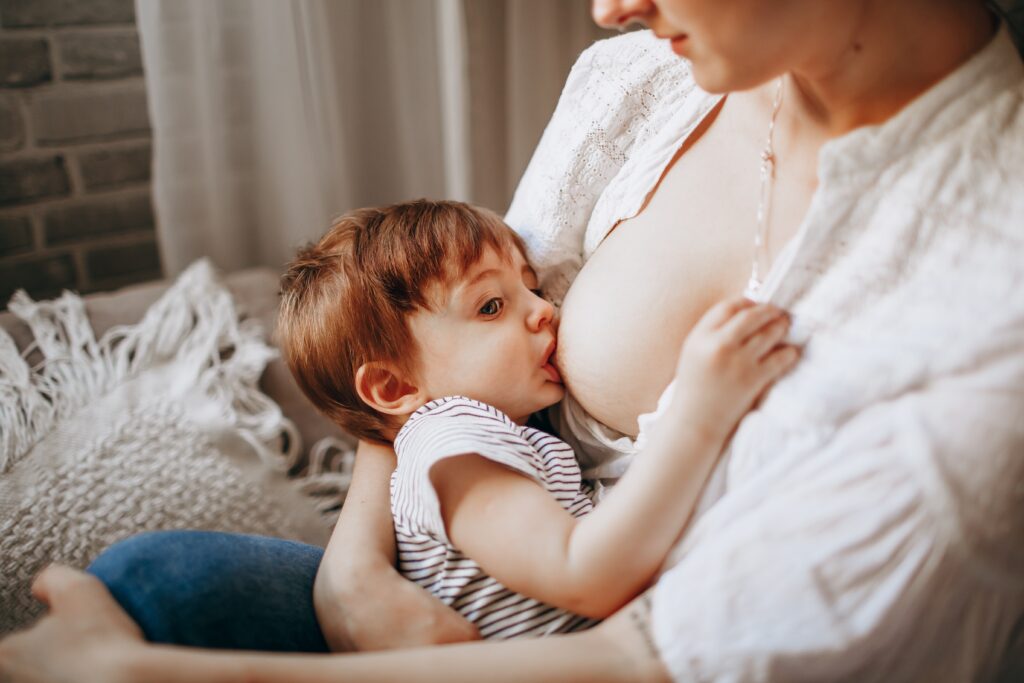
Nice Family Photo

September 30th, 2008

Breastfeeding Photo

Got Milk?

September 29th, 2008

In China’s spiraling milk-contamination crisis, some mothers are making money selling their breast milk.

As news spread of the deadly taint of the industrial chemical melamine in China’s milk supply last week, new father Jimandy Wu approached his wife with a business proposition: She could become a nai ma, or wet nurse. He had read on the Internet about the practice, in which a woman feeds her own breast milk to someone else’s child.

“Why not,” says his 24-year-old wife, Tina Huang, a mother in the southern Chinese boomtown of Shenzhen who says she produces more milk than her own 2-month-old baby can use. “It’s a pity that I waste my breast milk when I see on TV so many kids with no milk to drink because of the contaminated powder.”

Read the full article here:- [The Wall Street Journal]

DOH encourages mothers to breastfeed amid China milk contamination

September 22nd, 2008

Amid concerns over melamine-contaminated milk products from China, the Department of Health (DOH) on Monday encouraged mothers to “go back” to breastfeeding.

In a radio interview, DOH Undersecretary Alexander Padilla said that while his department promotes breastfeeding, aggressive ads by milk firms had lured mothers to turn to formulas and powdered milk.

“Ito rin siguro magtulak sa ina natin na ipagpatuloy ang breastfeeding. Now is the best opportunity to say that (Perhaps the scare over contaminated milk may push some mothers back to breastfeeding. Now is the best opportunity to say that),” Padilla said in an interview on dwIZ radio.

Read the full article here:- [GMA News]

Despite Benefits of Breast-Feeding, Many Hospitals Still Distribute Formula

September 8th, 2008

Hospitals may be changing a long-standing practice of giving new moms gifts sponsored by formula companies, in an effort to encourage breast-feeding.

‘Formula undermines breast-feeding’
Most hospitals give new mothers formula samples when they are discharged, but that tradition might be changing, according to a study in the Archives of Pediatrics & Adolescent Medicine. The study, reported by WebMD, asked nearly 1,300 hospitals about their practices.

Maternal health experts are concerned that women who get formula won’t breast-feed, which is best for infants.

Read the full article here:- [Finding Dulcinea]

Breastfeeding Photo

August 21st, 2008

Breastfeeding Photo

More women breastfeed

August 14th, 2008

More women than ever are breastfeeding their babies, but a new study says they don’t do it nearly as long as doctors recommend.

About three-fourths of American mothers tried breastfeeding, but only 36 percent were still doing it six months later and just 18 percent were breastfeeding a year later, according to the Brigham Young University study.

The American Academy of Pediatrics recommends exclusive breastfeeding for the first six months and continued breastfeeding through at least the baby’s first year, according to the study.

The rates the authors cite also are far from close to reaching a national goal set by federal health officials for 2010. Healthy People 2010 wants 50 percent of new mothers to breastfeed exclusively for six months and 25 percent through the first year.

Read the full article here:- [Statesman.com]

Mums urged to breastfeed

August 14th, 2008

Mums are being urged to breastfeed – because it’s better for their babies.

The call comes during World Breastfeeding Week, with NHS Ayrshire and Arran leading the way.

Research has shown babies who breastfeed are less likely to develop childhood leukemia or infant death syndrome.

Mums can also lower their risk of ovarian cancer, breast cancer and osteoperosis.

And one Ayrshire mum is in no doubt that breastfeeding is the way ahead.

Read the full article here:- [Ayrshire Post]

UC San Diego Studies Mother’s Milk for Tiny Babies

August 12th, 2008

Breast is best” is a mantra every new mom hears with when it comes to feeding her newborn. Human milk is known to boost brain development, prevent life-threatening infections, decrease allergies, and promote stronger bones and a higher IQ. But what’s a mother to do when her premature infant weighs only ounces and is not able to swallow the milk?

To answer this question, researchers at UC San Diego Medical Center have launched a comprehensive program to study how breast milk can be fed to premature infants and to identify the ingredients that give human milk its life-boosting qualities. Called Supporting Premature Infant Nutrition (SPIN), the new program is focused on the provision, analysis, and research of human milk to improve nutritional and neurodevelopmental outcomes in preterm babies. The program is believed to be the first of its kind in the United States.

“UC San Diego Medical Center is a ‘Baby Friendly Hospital’ which means we encourage breastfeeding as the preferred method of infant nutrition for our newborns,” said Neil Finer, M.D., director of neonatology at UC San Diego.

Read the full article here:- [Newswise]

Photo

August 10th, 2008

Breastfeeding

Breastfeeding moms crowd Vancouver clothing store

August 8th, 2008

Scores of breastfeeding mothers crowded into downtown Vancouver’s H&M clothing store Thursday afternoon to protest the way another woman was treated when she tried to feed her baby in public.

At least 60 women sat cross-legged on the floor, milled about the store feeding their babies or spilled out into Pacific Centre mall in support of Manuela Valle, who was told by store staff on Tuesday to go into the changeroom to feed her two-month-old daughter Ramona.

Others stood outside the storefront on Granville Street, carrying signs that read: “Get a room? Human rights mockery” and “Babies for Breastfeeding.”

Read the full article here:- [The Vancouver Sun]